

Centralize, transform and expose your industrial data without writing a single line of code.
Configure and administer your data flow architecture, connect your business tools and make your data – and its distribution – reliable.
Why a no-code ETL for industry?
Traditional ETLs (Talend, Informatica, SSIS) require deep development skills, weeks of integration and substantial budgets.
Traditional ETL
- Dedicated backend developers
- 3 to 6 months to implement
- Five-figure licenses
- Heavy reliance on IT
- Cost per connector
Vision Data Integration
- Visual no-code interface
- 2 to 4 weeks to production
- Unlimited connectors included
- Autonomy for business teams
- Sovereign hosting in France
The 4 pillars of Vision Data Integration
Multi-flow
API Maker orchestrates an unlimited number of pipelines in parallel, from two applications to fifty heterogeneous sources (SAP ERP, Carl CMMS, Aveva MES, Siemens PLCs, LoRaWAN sensors), while guaranteeing data integrity.
Multi-environment
Development, testing, production: version management, promotion between environments and continuous deployment, with no operational downtime on your lines.
Multi-user
Role management, granular permissions and audit trails to control who can view, edit or distribute which data, across business, IT, quality and production.
Maximum security
Automatic backups, point-in-time restore, TLS and AES-256 encryption, sovereign hosting in France, GDPR compliance.
The ETL process in 4 steps
Extract the data
Extraction is the first link in the ETL chain, and it’s where most projects get stuck. Vision Data Integration natively supports more than 50 connectors to capture data where it lives: REST/SOAP APIs of your CMMS (Carl Software, Mainta, Twimm), BIM Data, BMS/BEMS, or IoT brokers (MQTT, OPC-UA).
You can also import CSV or Excel files (one-off or scheduled recurring) and query your relational databases directly (SQL Server, Oracle, MySQL, PostgreSQL) through a visual editor or in native SQL.
Structure the data
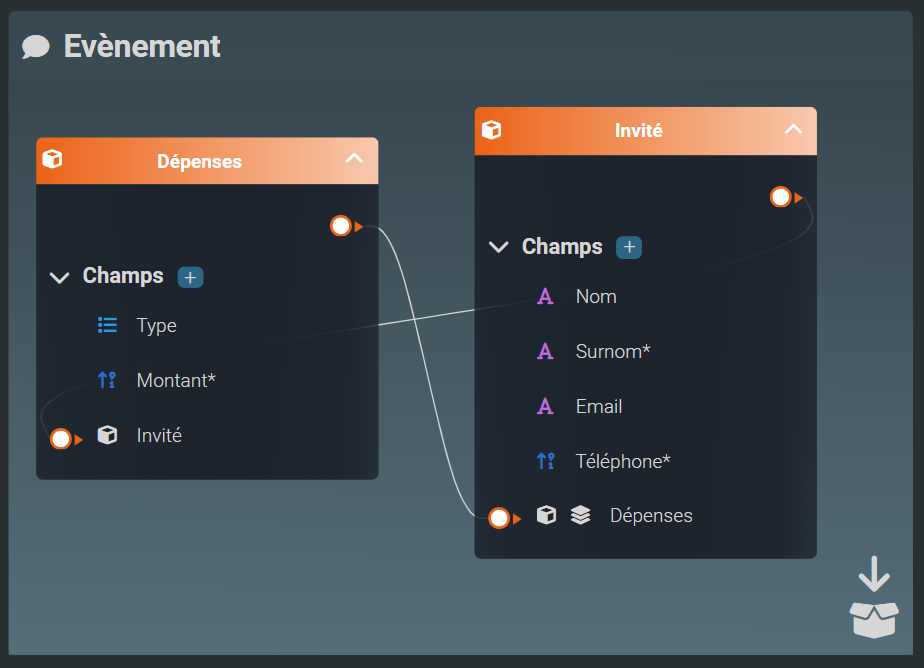
Raw data only has value within a coherent model. A visual conceptual modeler organizes your tables, defines field types (text, numeric, date, geolocation, attachment, relation), sets integrity constraints and materializes relationships (one-to-one, one-to-many, many-to-many).
You assign access rights at the table, field or row level. This model becomes the shared backbone across your no-code applications, your BI dashboards and your exposed APIs.
Transform the data
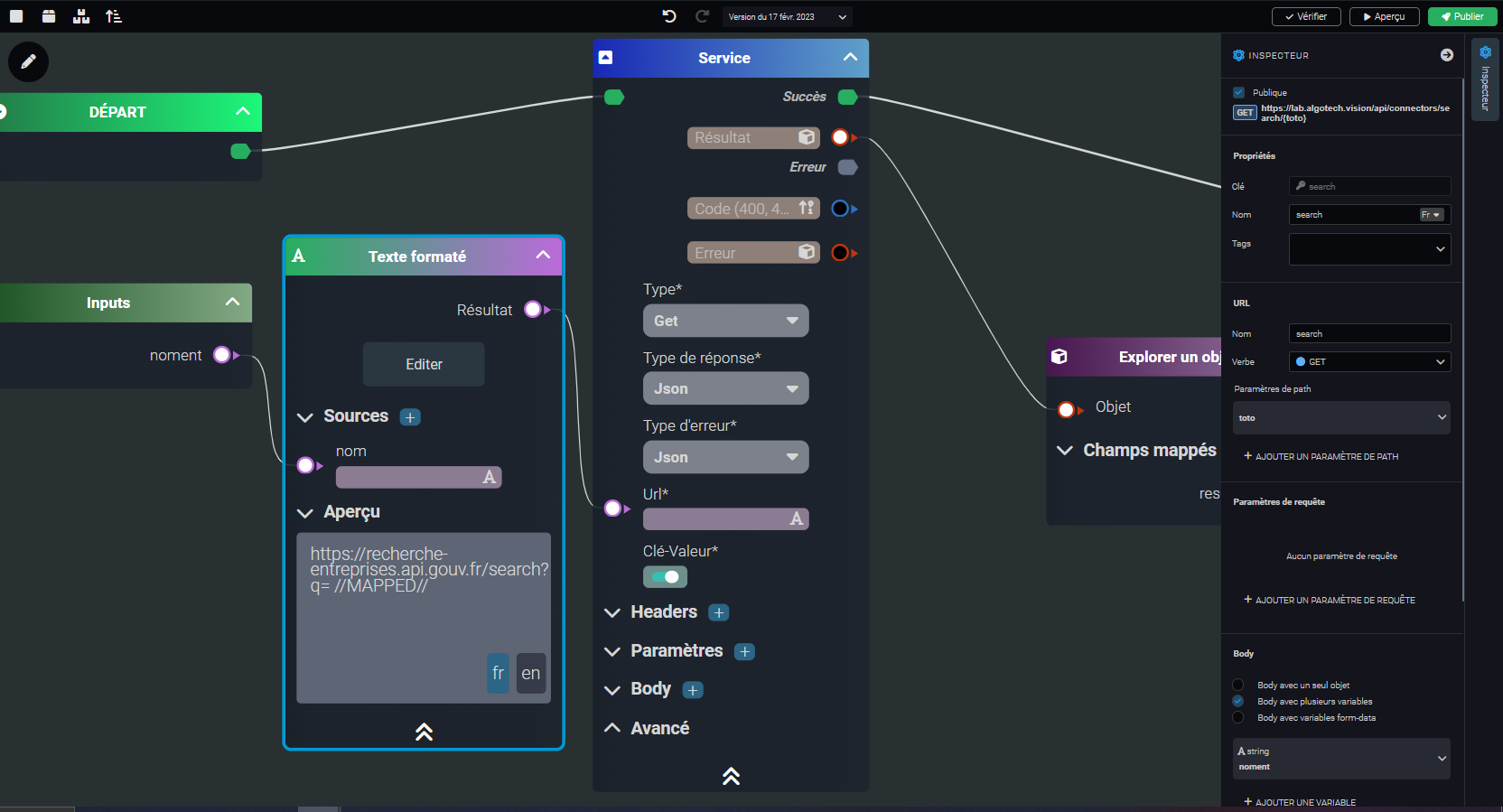
- Transmutation, filtering and sorting of data.
- Configurable computation tasks.
Load / Expose your data
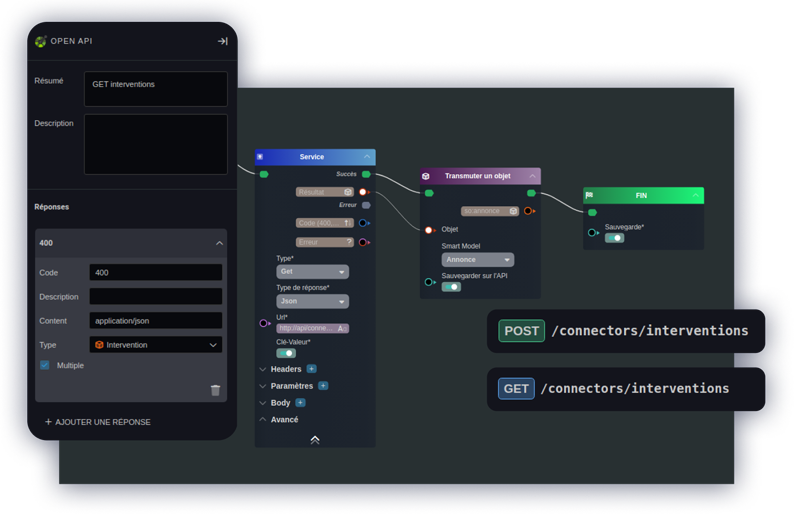
- Automatic exposure and documentation in OpenAPI format (for BI, AI…).
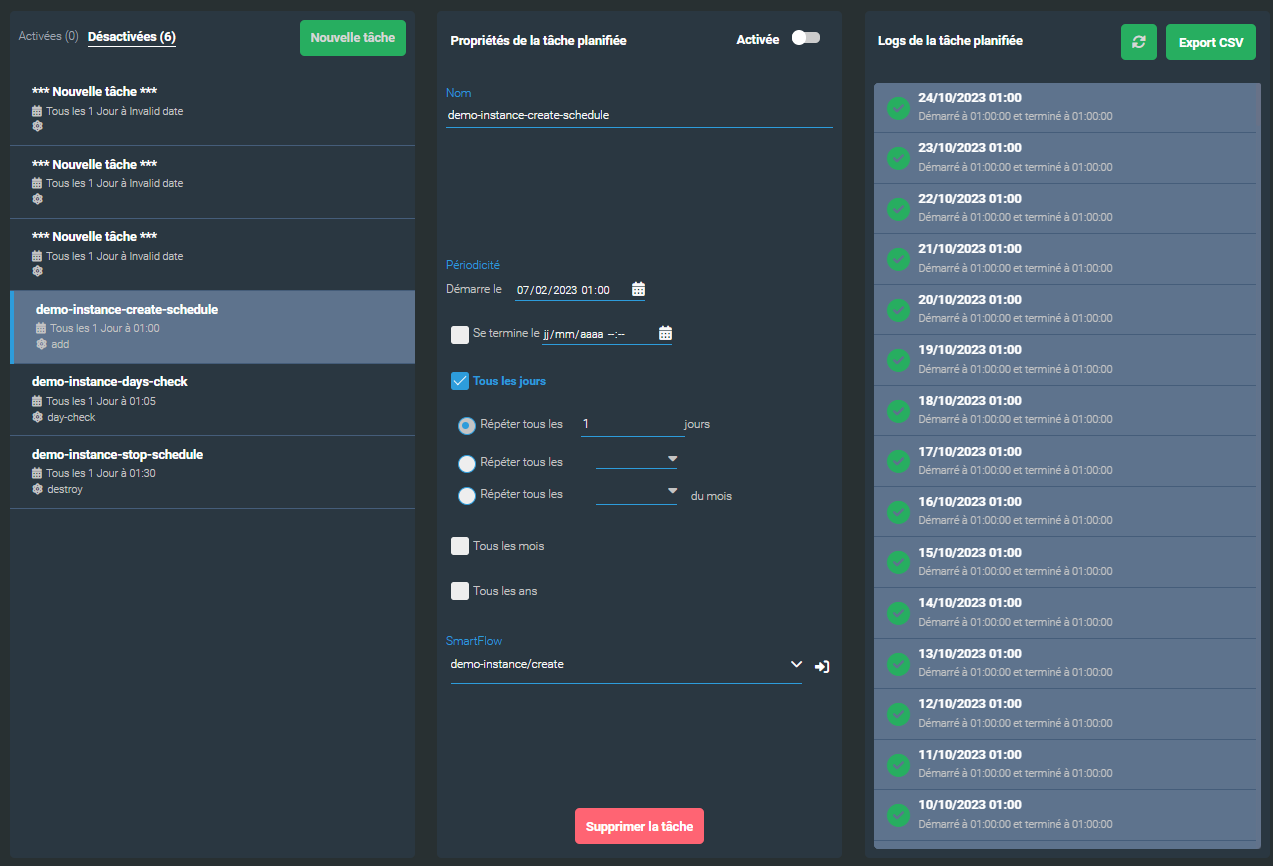
- Writing to third-party solutions via POST or scheduled imports (ERP, CMMS).
- Generating .pdf reports from .xlsx and .docx templates.